I gave up the second screen, and the road got longer
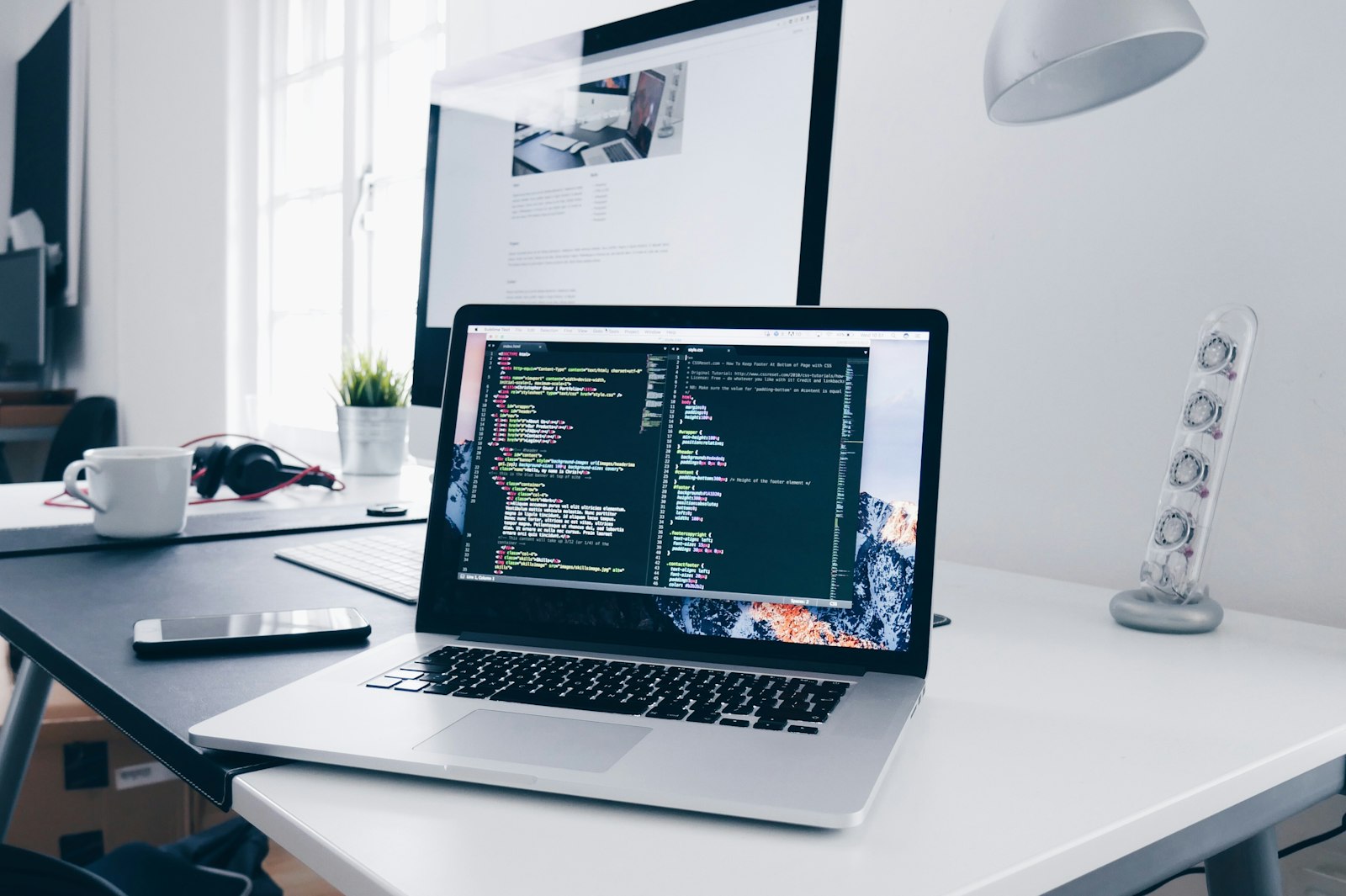
I am in a homestay somewhere in the Central Highlands. MacBook open, nothing else on the desk. I am trying to nudge a CSS gap, and I remember when the 16-inch portable monitor would have saved me twenty minutes. Two screens, the diff on one, the browser on the other, done.
I left that monitor at home. On purpose.
the bag that held a whole desk
During covid, I bought an Aer Tech Pack 2. The bag had compartments for everything. MacBook Pro in the sleeve. 16-inch portable monitor in its own slot. External keyboard in the front. Mouse, chargers, cables, all nested. The bag was built for a person who carried a desk, and that person was me.
I was a frontend developer. The second screen was not a luxury. It was the thing that made UI work possible on the road. Design on one monitor, code on the other. Inspect, adjust, check, repeat. Without it, I was squinting at a single screen, flipping between editor and browser, losing the thread every time.
The Aer pack traveled with me. Real trips, not just cafes. Family visits, homestays, weeks away from the office. It was heavy, and it was correct. Every item in it earned its slot because the work demanded it.
the work moved out of the screen
Then AI became the center of how I work. Not a side tool. The main thing.
The shift happened slowly, then all at once. I stopped writing code by hand. I started describing what I wanted, reviewing what came back, and steering. The terminal took over. Reading diffs, making decisions, running manual tests, talking through architecture. The work moved up a level, out of the files and into the conversation.
A second monitor is useless when your main surface is a terminal session and a chat. You do not need to watch the browser refresh. You need to read what the model produced, decide if it is right, and tell it what to fix. That work happens in one screen, sometimes in one pane.
The 16-inch monitor stopped earning its slot. The keyboard stopped earning its slot. The mouse stopped earning its slot. One by one, the items that justified the Aer pack became dead weight.
the new kit
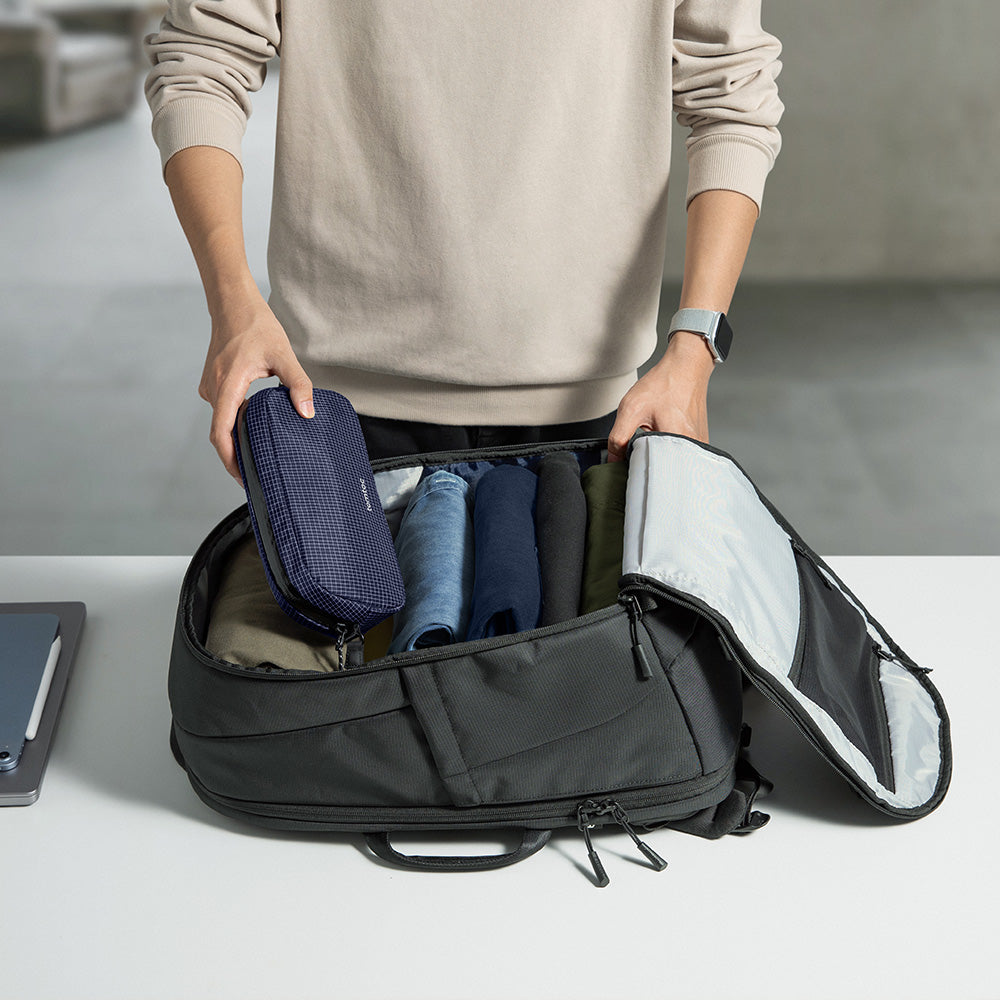
I switched to a Tomtoc T77. Clamshell opening, travel pouches instead of compartments. The pouches are for chargers, power banks, cables. Not for monitors or keyboards.
The whole tech kit is now: MacBook, two power banks, chargers, a few cables. That is it. No external keyboard. No mouse. No second screen. The bag is half the weight of the Aer pack, and it opens flat in ten seconds. I am operational the moment I sit down.
what I gave up
I am not going to pretend this is all upside.
No external monitor means no serious pixel-precise UI work on the road. If a task needs me to stare at two views side by side and nudge them until they match, I save it for when I am home with a real display. No external keyboard means a long typing session hurts my wrists more than it used to. No mouse means anything fine-grained in the browser takes longer.
The lighter bag has a real cost. I just pay it rarely now, because the work shifted enough that I rarely need those things away from my desk. The tradeoff became affordable. Not free, but affordable.
the rule
Carry for the work you actually do, not the work you used to do.
The Aer pack was not wrong. It was correct for a frontend developer who lived in two screens. The Tomtoc is not right because minimalism is virtuous. It is right because I now spend my day reading text, making decisions, and running manual tests in a terminal. The gear follows the work. When the work changes, the bag changes.
If I ever go back to building interfaces by hand, the monitor comes back. The keyboard comes back. The bag gets heavy again. I will not fight it. The weight was never the problem. Carrying weight for work I no longer do, that was the problem.